Why Intergenerational Connections Matter in the Fight Against Elderly Isolation
There is something particular about the silence that settles in rural life as you get older. Friends move away or pass on. Buses stop running. Families grow up and scatter. For many older people living in villages and small towns, social isolation is not a crisis that arrives suddenly — it creeps in gradually, season by season, until a whole week can pass without a real conversation.
Intergenerational connection is one of the most human and practical responses to that silence. Not a programme. Not an initiative. A relationship — between people of different ages who find genuine common ground.
The Reality of Isolation Among Older People in Rural Areas
Rural elderly communities face a particular kind of isolation that urban services rarely account for. Distance is the obvious factor, but it compounds quickly: a missing bus route means a missed appointment, a missed social club, a missed chance to see another face.
When neighbours of the same generation begin to disappear — through illness, bereavement, or relocation to care facilities elsewhere — what remains is not just loneliness but a loss of shared memory and mutual recognition. The people who knew you as a younger person, who remember the same local landscape, the same village characters, the same way things used to be done — they become harder to find.
In small communities, this loss is felt acutely. There are no anonymous crowds to dissolve into, no casual encounters at the supermarket or on public transport. The social infrastructure that city dwellers take for granted simply does not exist in the same way. And without it, isolation can become the default condition rather than a temporary state.
This is the context in which intergenerational connection becomes not a nice extra, but something genuinely important.
What Intergenerational Connection Actually Means
Intergenerational connection is a reciprocal relationship between people of significantly different ages, built around shared activity and mutual respect — not a formal programme where young volunteers perform kindness for passive elderly recipients.
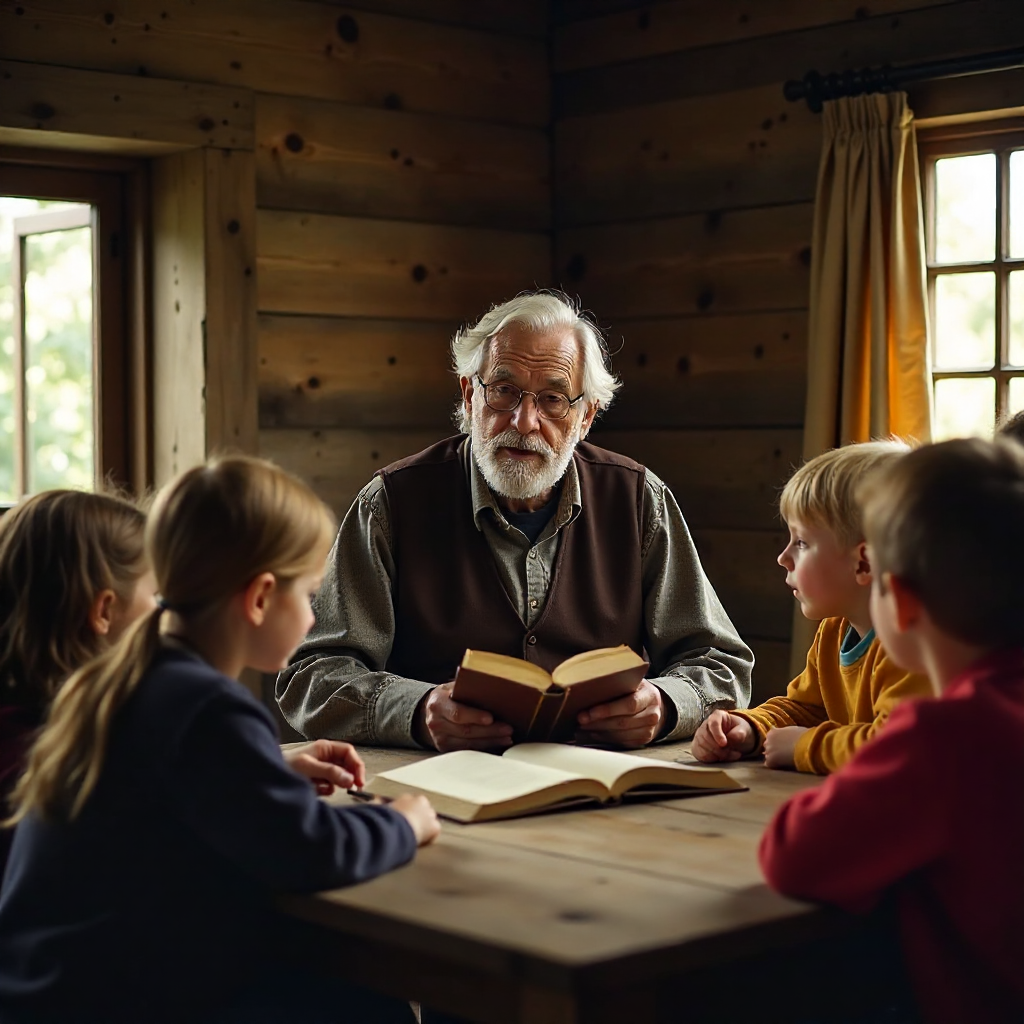
That distinction matters. The image of a teenager visiting a care home to tick a community service box is not what we are talking about here. Real intergenerational connection happens when an older person teaches a younger one how to preserve fruit, or when a teenager helps a neighbour understand a smartphone and comes back the following week because they enjoyed the conversation. It happens around shared purpose, not obligation.
These connections do not require an organisation to exist. They can happen through a local allotment, a church hall, a village fete, a school history project. What they do require is an environment — social and physical — where different generations have reason to occupy the same space and talk to each other honestly.
Why These Connections Work — and Why They Matter
Intergenerational relationships work because they meet a need that runs across every age group: the need to feel seen, useful, and part of something larger than yourself.
Younger people — children, teenagers, young adults — are often navigating questions of identity and direction. Older people carry lived experience of exactly those questions. The conversation that emerges naturally from that dynamic is not sentimental; it is genuinely useful to both sides.
For older adults, the emotional benefits of feeling valued and needed are hard to overstate. Chronic loneliness affects mood, motivation, and physical health over time. When an older person has a reason to get up, prepare something, meet someone who is genuinely interested in what they know — that reason alone can shift their day, and over time, their sense of themselves.
For younger people, especially those growing up in rural areas with limited exposure to diverse life experience, a relationship with an older neighbour or community member can offer perspective, patience, and a sense of belonging to a place and its history. That is not nothing — particularly at a time when many young people feel culturally cut off from their own communities.
The connection does not have to be deep or frequent to matter. Regularity and genuine interest count for more than intensity.
Older People as Connectors, Not Just Recipients
One of the most important shifts in thinking about elderly isolation is recognising that older adults are not simply a problem to be solved — they are often the people best placed to build the connections that solve it.
This is central to the idea of older people supporting older people, and it extends naturally into the intergenerational space. A retired farmer who has lived in the same valley for sixty years carries community memory that no database can replicate. A grandmother who raised children through difficult decades understands patience and perspective in ways that formal training cannot teach.
When older people are positioned as connectors — as people with something real to offer younger generations — the dynamic of isolation begins to shift. They are no longer waiting to be visited; they are participants in the life of their community. That participation is what creates social resilience over time: not just individual wellbeing, but a community that knows itself and can draw on its own resources.
In rural communities especially, this matters. Outside services are often thin on the ground. What sustains people is what has always sustained them: knowing their neighbours, being known, and feeling that their presence in a place has value.
Simple Ways Intergenerational Connection Happens in Rural Communities
The most durable intergenerational activities in rural settings tend to be grounded in something practical — a shared task or interest that gives people a reason to come back.
Some examples that work well in small communities:
- Gardening and growing projects — allotments and community gardens bring people together around physical work and seasonal rhythms. Older people often hold deep practical knowledge here, and younger participants bring energy. The produce becomes a reason to share meals and conversations.
- Storytelling and oral history — structured or informal sessions where older residents share memories of local life. Schools have run these successfully as part of history curricula, but they work just as well without an institutional framework, organised through a village hall or local library.
- Skill-sharing — woodworking, knitting, baking, repair skills, local crafts. These create a natural mentoring structure without anyone having to call it that.
- Community events and regular gatherings — a monthly lunch, a village quiz, a harvest event. Consistency matters more than scale. The same faces, reliably present, build trust over time.
- Volunteering and mutual aid — older adults helping to organise, younger people helping with physical tasks or technology. When both generations contribute to something that benefits the whole community, the relationship becomes genuinely reciprocal.
None of these require significant funding or outside expertise. They require someone to take the first small step of suggesting them and following through.
How Community-Led Support Amplifies These Connections
Peer-led community support makes intergenerational connection sustainable in rural areas because it operates through trust rather than bureaucracy.
When an older person reaches out to a neighbour, or organises a gathering, or passes on a skill — that act carries a different weight than a service delivered from outside. There is no professional distance, no referral process, no eligibility criteria. There is just one person who knows the community well, making something possible for someone else.
This is what peer support among older people does at its best: it lowers the barrier to entry. An older adult who might never call a helpline or attend a formal programme will accept a cup of tea from a familiar face. And from that cup of tea, a conversation begins — sometimes one that eventually draws in a grandchild, a local teenager, a young family recently arrived in the village.
Community belonging grows incrementally. Trusted local faces and low-key, low-pressure gatherings create the conditions in which intergenerational relationships can form naturally, without anyone having to label or manage them.
Taking the First Step — for Individuals and Communities
The first step toward intergenerational connection is usually smaller than people expect.
For an older adult, it might mean accepting an invitation they would normally decline, or offering to share something they know — a recipe, a skill, a story about a local landmark. For a family member or carer, it might mean looking around at who already exists in an older person's life and finding ways to deepen those connections rather than creating new ones from scratch.
For local organisers and community groups, it often means looking at what already happens in the community and asking: could this include a wider age range? Could the village gardening group welcome a school class? Could the local history archive involve teenagers in collecting and preserving stories?
Small changes in who is welcome, and how that welcome is extended, can shift the texture of a community over time. Meaningful connection at a community scale is built from hundreds of small moments, not one transformative event.
The older people who feel least isolated are not always those with the most formal support around them. They are often those who feel that their presence still makes a difference — who have given something to someone younger, and received something back. That exchange is available to most people, in most places, right now.
Frequently Asked Questions
What is an intergenerational program and do I need to organise one formally?
An intergenerational program is any structured activity that brings people of different age groups together around a shared purpose. You do not need to formalise it — a regular skill-sharing session, a gardening group, or even a standing lunch invitation counts. What matters is consistency and genuine exchange, not paperwork.
Can older people in villages or small towns really build these connections without outside help?
Yes — and in many cases, they already are. Rural communities have always relied on informal networks and mutual aid. Intergenerational connection does not require an outside organisation. It requires a willing person to start something small and keep showing up.
How does staying connected with younger generations affect the health of older adults?
Sustained social connection is consistently linked to better mood, stronger motivation, and greater sense of purpose in older adults. Feeling useful and seen by people across age groups counters the particular deflation that comes from social invisibility. Physical health outcomes also improve over time when chronic loneliness is reduced.
What if an older person feels they have nothing to offer younger people?
That feeling is common and almost always inaccurate. Practical skills, local knowledge, patience, and lived experience are genuinely valuable — and often things younger people actively seek but do not know how to ask for. A good starting point is something simple and hands-on: cooking, gardening, a craft, a local story. The sense of having something to offer usually follows the first real exchange.
How can a rural community get started with peer-led intergenerational activities?
Start with what already exists. Look at existing community gatherings and ask whether they could include a wider age range. Talk to a local school, a youth group, or a parent and toddler group about one shared activity. Peer-led means community-driven — the person who organises it does not need a title or funding, just a consistent commitment to making space for people to meet.