Volunteer Coordination Strategies for Rural Elderly Support Initiatives
Running a volunteer programme in a rural community is a different kind of challenge. The geography is wider, the infrastructure thinner, and the people you're trying to reach are often the hardest to find. But rural elderly support initiatives have something that many larger organisations lack: genuine community trust, deep local knowledge, and volunteers who understand exactly what their neighbours are going through — because they're living it too.
This guide is written for small coordinating teams who want practical, workable strategies. Not theory. Not corporate frameworks. Just clear guidance on how to organise, support, and sustain a peer-driven rural volunteering programme.
Why Coordination Looks Different in Rural Communities
Rural volunteer coordination requires a fundamentally different approach because distance, sparse population, and limited infrastructure make standard methods unworkable. What works in a town of 50,000 people rarely translates to a scattered rural community of 3,000.
In rural settings, a single volunteer might cover a radius of ten miles. There may be no reliable bus route, patchy mobile signal, and no community centre within easy reach. The population is often older on average, which means both the people needing support and the people offering it may face similar physical or technological limitations.
This isn't a reason to scale down ambition. It's a reason to design differently. Coordination in rural contexts has to be lightweight, relationship-based, and deeply embedded in existing community rhythms — the church rota, the market day, the GP waiting room. When you work with those rhythms rather than against them, coordination becomes far more sustainable.
The Power of the Peer Model — Older Volunteers Supporting Older Neighbours
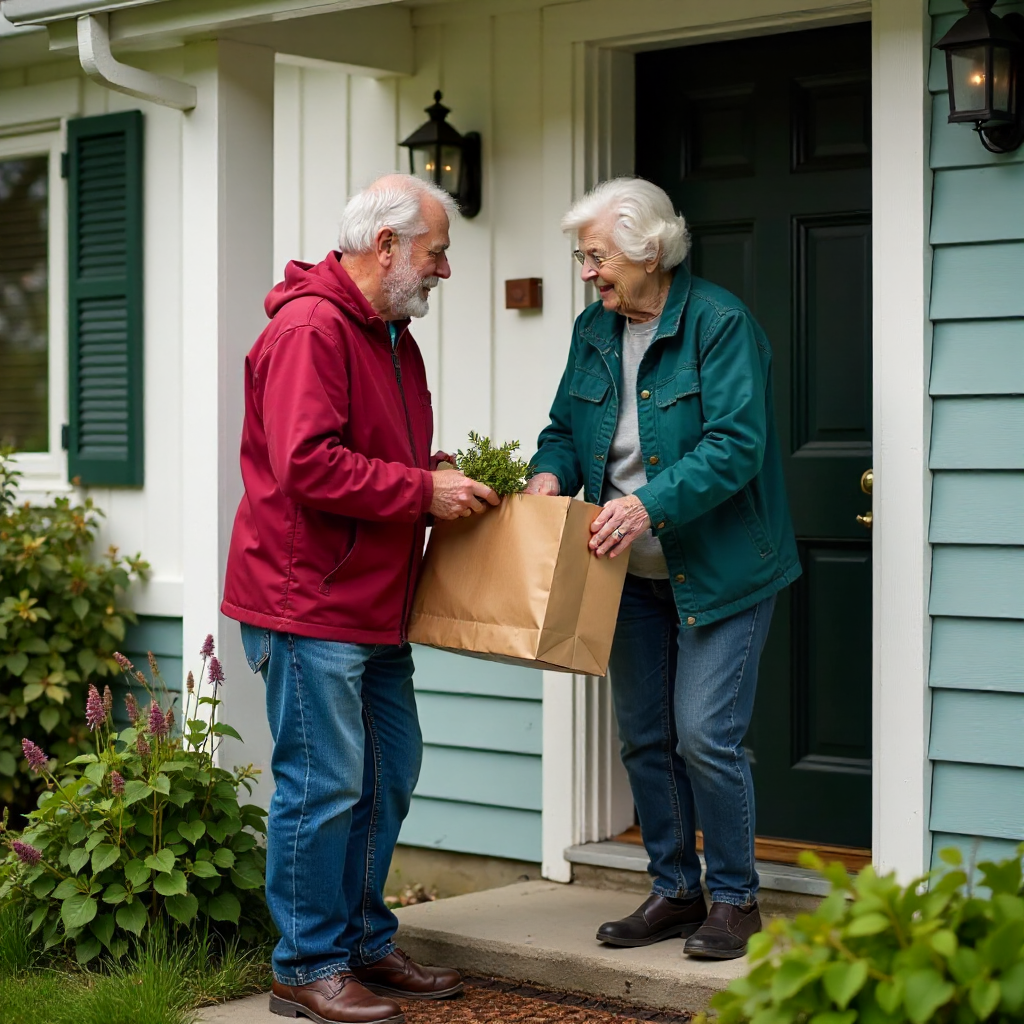
The peer volunteer model — where older adults actively support other older adults — is one of the most effective approaches available to rural elderly support programmes. Trust is built faster, conversations go deeper, and the support feels less like a service and more like neighbourliness.
When an 74-year-old volunteer knocks on the door of an 81-year-old neighbour, something shifts. There's no professional distance. The volunteer understands what it's like to struggle with a heavy shopping bag, to feel invisible in a crowd, or to worry about a health appointment. That lived experience is not a limitation — it's the programme's greatest asset.
Peer models also carry a quiet dignity for both parties. The person receiving help is not positioned as a passive recipient but as part of a community of mutual care. And the volunteer gains purpose, social connection, and a renewed sense of contribution. Mutual benefit is built into the design, which makes these programmes more resilient over time.
Recruiting Volunteers in Rural Areas
Effective rural volunteer recruitment relies on personal connection and trusted community channels rather than advertising campaigns or online sign-up forms. Word of mouth, in this context, is not a fallback — it's the primary strategy.
Start with the people already known to your initiative. Ask current volunteers to think of one person they trust who might want to get involved. A direct, personal ask from a friend or neighbour is far more persuasive than a poster on a noticeboard.
Beyond personal networks, the most productive community outreach touchpoints in rural areas tend to be:
- Faith communities — churches and chapels often have established networks of people who already volunteer informally and are looking for more structured ways to help
- Village halls and community centres, where local groups already gather regularly
- GP surgeries and pharmacies, where a well-placed leaflet or a word from a receptionist carries real weight
- Local markets, post offices, and rural pubs — places where people linger and talk
- Parish councils and local newsletters, which often have loyal readerships in rural areas
Keep your ask simple and specific. "We're looking for someone who could make a friendly phone call to a neighbour once a week" is far more likely to get a yes than a vague invitation to "get involved in volunteering." People say yes to things they can picture themselves doing.
Assigning Roles That Match Capacity and Confidence
Good role assignment means matching what each volunteer can realistically offer — in terms of time, mobility, and confidence — to tasks that genuinely need doing. Overloading a volunteer, or placing them in a role that doesn't suit them, is one of the fastest ways to lose them.
Design your roles in tiers. Some volunteers will be able to do regular home visits or accompanied trips to appointments. Others may only be comfortable with a weekly phone call or writing a card to someone who's been unwell. Both contributions matter. A flexible role structure means you can involve a much wider range of people, including those whose own health or mobility limits what they can take on.
When bringing a new volunteer on board, have a proper conversation about what they'd enjoy, what they're good at, and what they'd prefer to avoid. Don't assume. An older volunteer who spent forty years as a nurse might be brilliant at health-related befriending — or they might be completely done with anything medical and want to help with gardening instead. Ask.
Revisit role assignments regularly. A volunteer's circumstances can change — health, caring responsibilities, seasons — and a good coordinator notices when someone needs their role adjusted before they quietly step away.
Overcoming Logistical Barriers — Transport, Communication, and Scheduling
Transport and communication are the two biggest practical obstacles in rural volunteer coordination, and both require community-based solutions rather than technology-first ones. Not every volunteer or recipient will have a smartphone, reliable broadband, or access to a car.
For transport, look first at what already exists. Some volunteers will have cars and be willing to offer lifts — but coordinate this carefully to avoid over-reliance on a small number of drivers. Community car schemes, where they exist, can be formal partners. In some areas, local councils or charities run volunteer driver networks that your initiative can link into rather than duplicate.
For communication, a phone tree remains one of the most reliable coordination tools in rural elderly support work. Each volunteer contacts two or three others, who each contact two or three more. Updates, schedule changes, and check-ins can move through a whole network without anyone needing email or a group chat app.
Scheduling works best when it's built around existing community rhythms. If several volunteers already attend the same church on Sunday morning, a brief coordination catch-up afterwards costs almost no extra effort. Piggyback on what's already happening rather than creating new obligations.
Keeping Volunteers Engaged — Recognition, Support, and Community
Volunteer retention in rural programmes depends less on formal recognition schemes and more on whether volunteers feel genuinely seen, supported, and connected to something meaningful. People stay when they feel they belong.
Simple, consistent acknowledgement goes a long way. A personal thank-you call from the coordinator after a difficult week, a handwritten card at Christmas, a mention in the local newsletter — these gestures cost very little and signal that the volunteer's contribution has been noticed. Recognition doesn't have to be elaborate to be effective.
Equally important is creating space for volunteers to support each other. A quarterly get-together — even just tea and biscuits in someone's living room — gives volunteers a chance to share experiences, raise concerns, and feel part of a team rather than isolated individuals doing their own thing. In dispersed rural communities, this sense of collective purpose is easy to lose and worth protecting deliberately.
Watch for signs of volunteer fatigue, especially in peer models where the volunteer may themselves be managing health challenges or caring for a spouse. Build in natural pauses — a summer break, a reduced schedule during winter — and make it easy for volunteers to step back temporarily without feeling like they're letting anyone down.
Building Local Partnerships to Strengthen Your Coordination Capacity
Local partnerships extend what a small coordinating team can do without requiring more staff, more budget, or more hours. The key is identifying organisations that share your goals and have complementary resources.
The most productive local partnerships for rural elderly support initiatives typically include:
- GP surgeries and primary care networks, who can identify isolated patients and make referrals
- Parish and town councils, who often have small grants available and connections to community spaces
- Local faith communities, who may already be running informal befriending or food support
- Rural community transport schemes and volunteer driver networks
- Age UK local branches and similar organisations with existing infrastructure and training resources
Approach partnerships with a clear sense of what you're offering as well as what you need. A GP surgery that refers isolated patients to your programme benefits from knowing those patients will receive consistent, coordinated support — that's a genuine value exchange, not just a favour.
Capacity building through partnerships also means your volunteers don't have to figure everything out alone. A local Age UK branch might offer free training in safeguarding or first aid. A community hall might provide meeting space at no cost. A council might help with a small funding application. None of these require a formal memorandum of understanding — often a relationship built on a few honest conversations is enough to get started.
Frequently Asked Questions
How many volunteers do you need to start a rural elderly support initiative?
You can begin with as few as three to five committed volunteers, provided roles are clearly defined and expectations are realistic. Starting small allows you to learn what works in your specific community before scaling up. A manageable pilot is far more sustainable than an ambitious launch that overwhelms a small team.
What tasks are most suitable for older adult volunteers?
Befriending calls, accompanied walks, help with correspondence or forms, transport to appointments, and shopping assistance are all well-suited to older volunteers. The key is matching the task to the individual's capacity and interest — not assuming all older volunteers have the same abilities or preferences.
How do you coordinate volunteers who don't use smartphones or email?
Phone calls, phone trees, and in-person catch-ups remain the most reliable tools. Designate a small number of volunteers as local contacts who can relay information to those in their area. Printed monthly updates sent by post can also keep less digitally connected volunteers informed without excluding them.
What should a volunteer induction or orientation cover for this type of programme?
Cover the programme's purpose and values, the specific role the volunteer will play, basic safeguarding awareness, who to contact if something concerns them, and what to do if they need to take a break. Keep the induction conversational and manageable — a two-hour meeting is more appropriate than a full-day training for most older rural volunteers.
How do you handle situations where a volunteer is also in need of support themselves?
This is common in peer models and should be anticipated from the start. Create an open culture where volunteers feel comfortable telling their coordinator when their own circumstances change. Having a clear, private way to raise personal needs — without it affecting their volunteer status — helps people stay connected to the programme even during difficult periods, whether as a volunteer, a recipient, or both.