How to Create a Peer-to-Peer Support System for Rural Seniors
Why Rural Seniors Need Peer-Led Support (Not Just Services)
Rural seniors face a combination of challenges that standard social care models simply weren't designed to address. Distance, infrequent public transport, and the quiet erosion of local services create a particular kind of social isolation — one that's easy to miss precisely because it's so normalised. Many older adults in rural communities have lived independently for decades and feel a deep reluctance to ask for help from "official" sources.
This is where same-age peers change the equation. An 80-year-old who grew up on the same stretch of moorland, who remembers the same school, who still attends the same chapel — that person carries a kind of credibility no professional keyworker can replicate. The Older People for Older People model is built on this truth: lived experience is an asset, not a qualification gap.
Professional services are stretched thin in rural areas. Waiting lists are long. Travel costs fall on the individual. A peer support network doesn't replace those services — but it fills the space between them, often preventing the slow decline that comes from weeks of no meaningful human contact.
What a Rural Peer Support System Actually Looks Like
A rural peer support network is a small, relationship-centred cluster of older adults who stay in regular contact with one another — by phone, by occasional visit, or through a shared anchor point like a village hall or church. It doesn't look like a charity. It looks like neighbours looking out for neighbours.
Realistic scale matters here. A functioning network of 8 to 15 people is a genuine success. You're not trying to build a regional programme in year one. You're trying to make sure that Mrs. Hargreaves three miles down the road hears a familiar voice at least once a week, and that someone notices if she doesn't answer.
The model has a few consistent features:
- Befriending pairs — one-to-one regular contact between a peer supporter and someone who is more isolated
- Telephone or low-tech outreach as the primary communication method, because smartphone or broadband access can't be assumed
- A loose cluster structure anchored around existing community meeting points
- One coordination role — a single person who keeps the threads connected without creating bureaucracy
The goal isn't activity programming. It's sustained human connection, built on trust, with a light enough structure that it doesn't collapse when life gets busy.
Step 1: Map Your Community and Find Your People
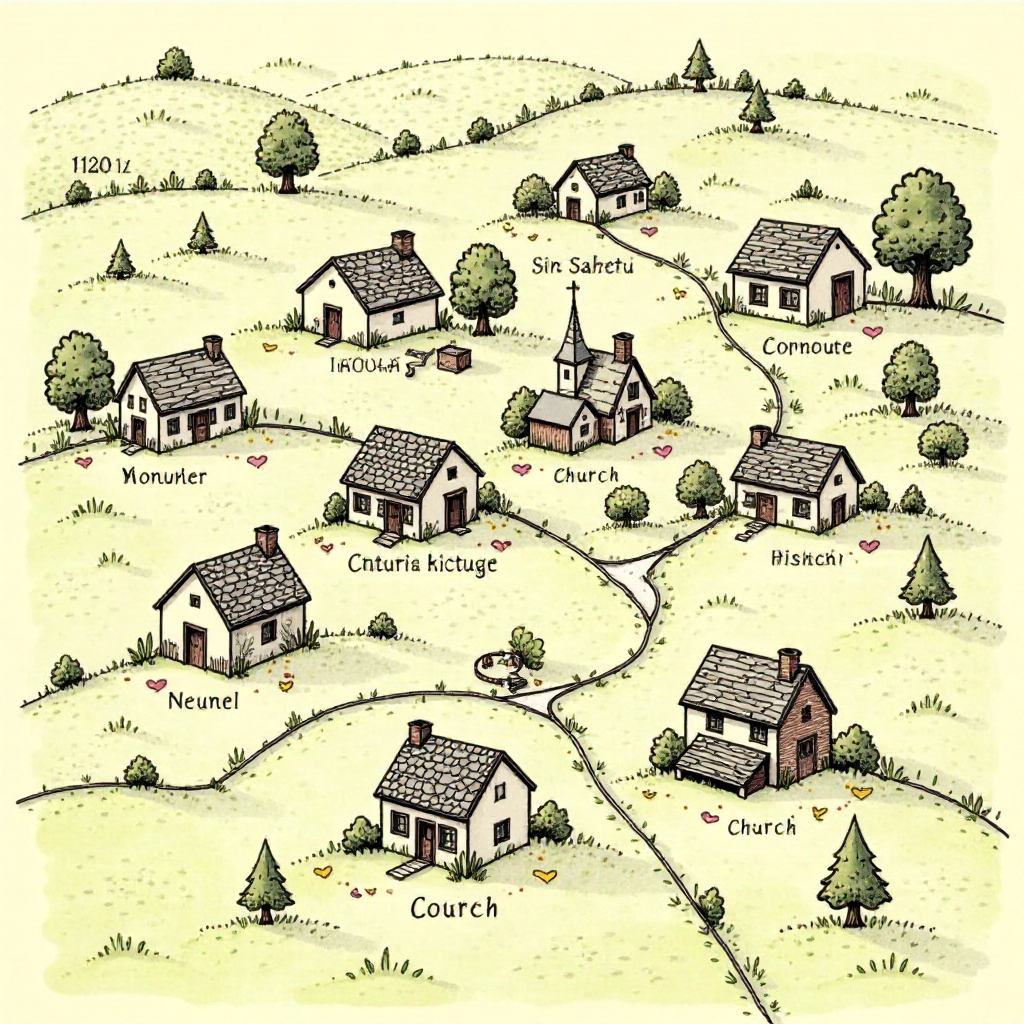
Start by mapping your geographic area before recruiting anyone. In rural settings, distance isn't just inconvenient — it shapes which pairings are sustainable and which will quietly fade. Identify natural clusters of 3–5 miles where residents share a postcode area, a local shop, or a community facility.
Talk to the people who already know the landscape. Community anchor points — local post offices, churches, GP surgeries, village halls — are your intelligence network. The postmistress knows who hasn't been in for a while. The vicar knows who lives alone since a spouse died. These conversations, handled with care, surface the people who most need connection and those who might offer it.
When identifying potential peer supporters, look for people aged 60 and over who are reasonably mobile, have good conversational warmth, and are already embedded in local life. They don't need to be outgoing or confident — they need to be reliable and genuinely interested in others. Some of the most effective peer supporters are quiet, steady people who simply show up.
Step 2: Recruit and Prepare Peer Supporters
Recruiting older volunteers works best through personal invitation, not posters. A direct ask from someone they respect — "I thought of you because you're good with people" — lands very differently from a flyer on a noticeboard. People who would never respond to a public appeal will say yes to a conversation.
The framing matters enormously. Avoid language that positions the role as caregiving, which many older adults associate with professional skill they feel they lack. Instead, describe it honestly: regular contact with a neighbour, a weekly phone call, a familiar face at the monthly get-together. The role is being present and consistent — not fixing anything.
Preparation can be kept genuinely minimal. A single two-hour session covering three things is enough to start:
- What the role involves and what it doesn't (boundaries matter early)
- Basic safeguarding awareness — how to recognise when something is wrong and who to contact
- How to handle their first conversation with a new contact
Over-training creates hesitation. The goal is enough confidence to begin, not perfection before starting. Most peer supporters learn far more from their first three months of contact than from any session in a village hall.
Step 3: Match Supporters with Peers and Build Routines
Good matching reduces dropout. When pairing a peer supporter with someone isolated, consider proximity first (can they realistically visit?), then shared background or interests, then practical factors like whether both have a landline. Geographic closeness matters more than personality compatibility at this stage — a relationship has to be maintainable before it can be meaningful.
Once matched, help the pair establish a simple rhythm early. A weekly phone call on the same day, or a fortnightly visit to a community anchor point, builds the habit before any sense of obligation can make it feel heavy. Consistency is the whole engine of befriending — it's not the depth of a single conversation that helps, it's the quiet reliability of another call coming.
Be honest with peer supporters about what sustainability looks like. Committing to one weekly call is achievable. Promising daily contact to three different people is not. Realistic scope from the start prevents the burnout that collapses networks six months in.
Keeping the Network Running: Coordination Without Bureaucracy
The lightest viable coordination layer is a single named organiser, a simple contact log, and a monthly check-in loop. That's genuinely all most rural peer networks need to stay functional.
The coordination role doesn't require professional skills — it requires someone who will notice if a pairing has gone quiet, will make one phone call to find out why, and will update a basic record. A notebook or a one-page spreadsheet is infrastructure enough. The moment this role becomes complex or time-consuming, you'll struggle to fill it.
Monthly check-ins between the organiser and each peer supporter serve two purposes: they catch problems before they become crises, and they give peer supporters a space to say if they're finding their role hard. That second function matters. Trust-building runs in all directions in a well-functioning network — not just between supporters and the people they support.
Build in a light annual review. Not a formal evaluation — just a conversation about what's working, who has drifted away, and whether any new people should be brought in. Rural communities change slowly, but they do change.
Safeguarding, Boundaries, and Knowing When to Refer On
Safeguarding in a peer support context means being clear about two things: what peer supporters are responsible for, and what they are not. A peer supporter's role is connection and early-warning, not assessment or intervention.
The non-negotiables are simple. Every peer supporter should know one person to call if they're concerned about a contact's safety or wellbeing — this could be the network organiser, a local GP practice, or Adult Social Care. This information should be written down and revisited at least once a year. In rural areas, signposting to professional services is often the most important thing a peer supporter can do.
Boundaries protect everyone. A peer supporter who begins driving someone to appointments every week, or managing their medication, has moved well outside the peer model — and is likely to burn out or create dependency. Being clear about scope from the start, and revisiting it as relationships develop, is not bureaucratic. It's what keeps the relationship sustainable.
If a peer supporter starts struggling themselves — illness, bereavement, their own isolation — that's not a failure. It's an expected part of working with older adults who are also aging. The network's coordination layer needs to be attentive to this shift and respond by reducing rather than ignoring the situation.
Frequently Asked Questions
How many people do you need to start a peer support network?
You can begin with as few as three people — one organiser and two peer supporters willing to make contact with one isolated person each. Starting small is not a compromise; it's how trust gets established. Networks that launch with 30 people and no relationships tend to fragment quickly.
What if potential volunteers say they're "too old" or "not qualified"?
This is the most common hesitation and it's worth addressing directly. The whole point of this model is that lived experience as an older rural resident is the qualification. Someone who has navigated bereavement, health changes, and rural life understands those realities in ways no training can replicate. Acknowledge their hesitation, then make the ask again more specifically: not "will you volunteer" but "will you call your neighbour once a week."
How do you maintain contact when some members have no smartphone or internet?
Telephone and low-tech outreach isn't a workaround — it's the default. A reliable landline call is more consistent and less exclusionary than any app or group chat. For people without even a landline, coordinate with family members or a local volunteer driver to maintain a monthly in-person visit through a community anchor point nearby.
What's the difference between befriending and peer support?
Befriending is one-to-one regular contact between two people, focused on companionship. Peer support is broader and includes the shared experience dimension — the peer supporter has faced similar life circumstances and can offer understanding as well as presence. In practice, the two overlap significantly. For rural seniors, the distinction matters less than the consistency of the relationship.
How do you handle a situation where a peer supporter becomes the one who needs support?
You treat it as a natural transition, not a problem. The coordinator's monthly check-in should catch this early. The peer supporter's role can be paused or reduced without drama. In a well-functioning network, the person who was giving support last year may be receiving it this year — that fluidity is the model working as intended, not breaking down.