Getting Around in Rural Areas: Practical Transportation Solutions for Seniors in Isolated Communities
For many older adults living in the countryside or in small, remote communities, getting from A to B is not a minor inconvenience — it is the difference between attending a vital medical appointment or missing it, between joining a weekly social club or spending another day alone. Transportation, in these settings, is a lifeline.
Why Transportation Is a Lifeline for Rural Older Adults
A lack of reliable transport directly threatens the health, independence, and wellbeing of elderly people in rural areas. When older adults cannot get to appointments, collect prescriptions, or simply visit a friend, the consequences compound quickly — missed diagnoses, worsening chronic conditions, and a creeping sense of invisibility.
The connection between transport and social isolation is well-documented. Older people who lose access to mobility frequently withdraw from community life, and that withdrawal accelerates both physical and cognitive decline. Getting out — even once a week — matters enormously.
This is why community-led transport solutions are not a luxury or a nice-to-have. They are a form of healthcare, a form of friendship, and a quiet act of dignity. When a neighbour drives another neighbour to the GP, something more than logistics is happening.
The Unique Challenges Seniors Face in Isolated Communities
Rural older adults face a specific set of transport barriers that urban-focused solutions rarely address. Understanding these challenges is the first step toward solving them.
- Sparse or absent public transport: Many rural areas have no bus service at all, or a single route running twice a week. This simply does not serve the needs of someone with regular medical appointments or mobility limitations.
- Driving cessation: When an older person gives up driving — due to health, eyesight, or confidence — they often lose their primary means of independence overnight. In a city, alternatives exist. In a village, they frequently do not.
- Long distances to services: A GP surgery, pharmacy, or supermarket might be 15 or 20 miles away. For someone without a car, that distance is a wall.
- Limited digital access: Many rural seniors are not comfortable booking transport online or using apps. Solutions that require a smartphone or broadband connection exclude the very people who need help most.
These barriers are real, but none of them are insurmountable. Communities across the country have found ways to work around each one — often through the energy and generosity of older people themselves.
Volunteer Driver Schemes — Neighbours Helping Neighbours
Volunteer driver schemes are one of the most effective and human-centred transport solutions available to rural elderly communities. In these programmes, local volunteers — many of them older adults themselves — use their own vehicles to drive neighbours to appointments, shops, or social events.
What makes these schemes work is not just the practicality. It is the relationship. A volunteer driver is not a taxi service; they are often a familiar face, someone who chats on the way to the hospital and waits while the appointment runs over. That human element is irreplaceable.
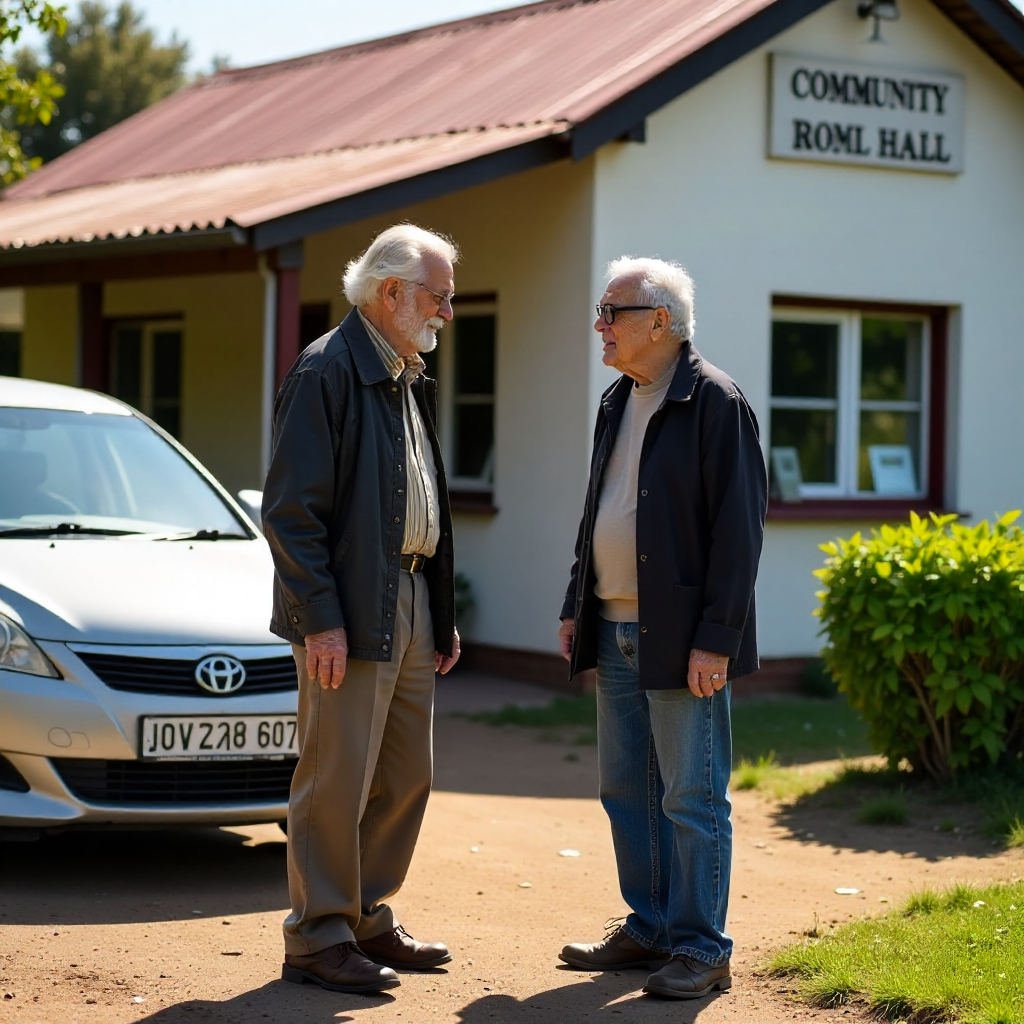
Many volunteer driving networks operate through local charities, churches, or community groups. Drivers are typically reimbursed for fuel costs, and some schemes are coordinated through a simple phone rota rather than any complex digital system — which makes them accessible to older coordinators and passengers alike.
The "older people helping older people" model is particularly powerful here. A retired person with a car and some free time is an extraordinary community asset. When that person is matched with a housebound neighbour who needs a lift to the optician, both lives are enriched.
Community and Demand-Responsive Transport Options
Beyond individual volunteer drivers, several structured transport services are designed specifically for rural and isolated communities. These range from minibus schemes to flexible dial-a-ride services that can be booked in advance by phone.
Dial-a-ride services allow passengers to book a seat on a shared vehicle for a specific journey — typically to a town centre, health facility, or community venue. Unlike fixed-route buses, demand-responsive transport adapts to where people actually need to go. Many local authorities and community transport networks run these services, sometimes at low or no cost for eligible older residents.
Community minibus schemes are another option, often run by village halls, parish councils, or voluntary organisations. A shared vehicle — sometimes funded through grants or local fundraising — can serve multiple passengers on a regular weekly route, covering shopping trips, lunch clubs, or health centre visits in one efficient run.
For those exploring what exists in their area, the UK Government's transport support guidance provides a useful starting point for understanding eligibility and available services, though local knowledge from community groups often proves just as valuable.
How Local Groups Can Set Up Their Own Transport Support
Starting a community transport initiative does not require a large budget or professional expertise — it requires a few committed people and a clear, simple structure.
Here is a practical starting framework for any local group considering this:
- Identify the need: Talk to older residents, carers, and local health workers. Find out which journeys are most commonly missed — GP appointments and pharmacy runs tend to top the list.
- Recruit volunteer drivers: Put a notice in the village hall, church newsletter, or local Facebook group. Many people are willing to help; they simply need to be asked directly.
- Set up a simple coordination system: A shared paper rota or a single phone number for requests works well in communities where digital access is limited. Complexity is the enemy of participation.
- Check insurance requirements: Volunteer drivers using their own vehicles to carry passengers should inform their insurer. Most standard policies can be extended to cover voluntary driving at minimal or no extra cost.
- Connect with existing networks: Community Transport Association and similar bodies offer guidance, training, and sometimes funding for new local schemes. You do not need to start from scratch.
The most successful local transport groups tend to start small — two or three drivers, a handful of regular passengers — and grow organically as trust builds and word spreads.
Connecting Transport to Wider Rural Support Services
Transport works best when it is part of a broader web of community support rather than a standalone service. A single trip to town can accomplish far more than one errand if it is planned thoughtfully.
Many community groups now combine transport with other services — a volunteer driver might collect a prescription while dropping someone at a lunch club, or a minibus run to the health centre might include a stop at the supermarket on the way home. These combined trips reduce the burden on volunteers and maximise the benefit to passengers.
Transport also connects naturally to befriending programmes, home visiting schemes, and social clubs for older people. When a driver notices that a passenger seems more withdrawn than usual, that observation can prompt a welfare check or a referral to additional support. In this way, transport volunteers become an informal but vital part of the community care network.
The goal, ultimately, is to help older adults in rural areas stay connected to life — not just to services, but to people, to purpose, and to the communities they have often lived in for decades.
Tips for Seniors and Families Navigating Transport Options
Finding the right transport help takes a little research, but the options are often closer than they appear. Here is a practical checklist to get started:
- Contact your local council or parish council and ask specifically about community transport schemes — many operate quietly and are not well advertised.
- Speak to your GP surgery. Many practices know about local transport support and can point you toward the right contacts.
- Ask at the local pharmacy, library, or village hall — these are often informal hubs of community knowledge.
- Check whether you or your family member qualifies for hospital transport for medical appointments — eligibility criteria vary, but it is always worth asking.
- If you are a carer, look into carer support organisations in your area; many maintain up-to-date directories of local transport options.
- Do not overlook neighbours and faith communities — informal offers of help are often available but never formalised until someone asks.
For older adults, asking for help with transport can feel like a loss of independence. Reframing it helps: accepting a lift from a neighbour is not dependence, it is community. And for the neighbour who drives, it is one of the most straightforward and meaningful contributions they can make.
Frequently Asked Questions
What can I do if there is no public transport near where I live?
Start by contacting your local council, parish council, or a nearby community centre to ask about volunteer driver schemes or demand-responsive transport. Many rural areas have informal networks that are not widely advertised. Local charities and faith groups are also worth approaching directly.
Can older volunteers legally drive other seniors to appointments?
Yes, in most cases. Volunteer drivers using their own cars for non-commercial journeys can carry passengers legally, but should inform their car insurer to ensure their policy covers voluntary driving. This is usually a simple process and rarely increases premiums significantly.
Are there free or subsidised transport options for elderly people in rural areas?
Many dial-a-ride and community minibus services charge little or nothing for eligible older passengers. Local authority funding, charitable grants, and NHS patient transport schemes can all contribute. It is always worth asking providers directly about concessions or free travel for those on low incomes or with specific health needs.
How do I find out what community transport schemes exist in my area?
Your local council website, GP surgery, and community centre are good starting points. The Community Transport Association also maintains resources to help people locate local schemes. Asking neighbours and community groups often turns up options that are not listed anywhere online.
What if a senior is no longer able to drive but lives far from any services?
This is one of the most common and serious challenges in rural ageing. The best immediate step is to contact local voluntary organisations and explain the situation clearly. Many communities have quiet networks of willing helpers who simply need to know there is a need. Longer term, connecting with a local transport coordinator or carer support group can help establish a more reliable arrangement.
Transportation for rural elderly people is not just a logistical problem — it is a question of who we want our communities to be. When older people can get where they need to go, they stay healthier, stay connected, and stay themselves. That is worth organising for.