Effective Fundraising Ideas for Rural Elderly Support Programs
In rural communities, a modest donation can help an older neighbor get to a medical appointment, receive a hot meal, or stay connected to other people. Effective fundraising for elderly support programs starts by linking each appeal to a specific local need, then choosing ways to give that match the community’s resources, distances, and volunteer capacity.
Small programs do not need elaborate campaigns to make a difference. A community meal, a local business partnership, recurring gifts, and carefully researched grants can work together to support transportation and meal assistance over time. The key is to make participation easy and show residents how their support is being used.
Start with the needs of local older adults
Begin fundraising by identifying the needs rural older adults say matter most. Clear, community-identified goals help residents understand what their donations will support and let a small program focus its limited time and money.
Ask older adults, caregivers, volunteers, and service providers what is missing. A short conversation after a meal program or a few calls to residents can reveal practical barriers: a lack of rides to appointments, difficulty getting groceries, isolation during winter, or the cost of delivering meals across a large area. Protect people’s privacy and avoid sharing personal stories or photos without informed permission.
Turn what you learn into a specific, realistic fundraising goal. For example, instead of asking for general support, explain that donations will help cover fuel for volunteer drivers or ingredients for community meals. If costs vary, say so; do not imply that a fixed donation buys a service unless the budget supports that claim.
- Transportation: Fuel, vehicle maintenance, ride coordination, or accessible transport options.
- Meals: Groceries, meal preparation, delivery supplies, or a shared dining program.
- Connection and safety: Social gatherings, wellness calls, or practical help with seasonal needs.
A useful planning check is to ask: Is the need confirmed by older adults? Can the program deliver the proposed service? Can donors see how funds contribute? If any answer is no, refine the goal before launching an appeal.
Choose fundraising ideas that fit rural communities
Rural fundraising works best when an activity is simple to organize, reachable for residents, and suited to local distances and facilities. Choose one manageable event or campaign rather than copying a large-town fundraiser that requires staff, a venue, or costly travel.
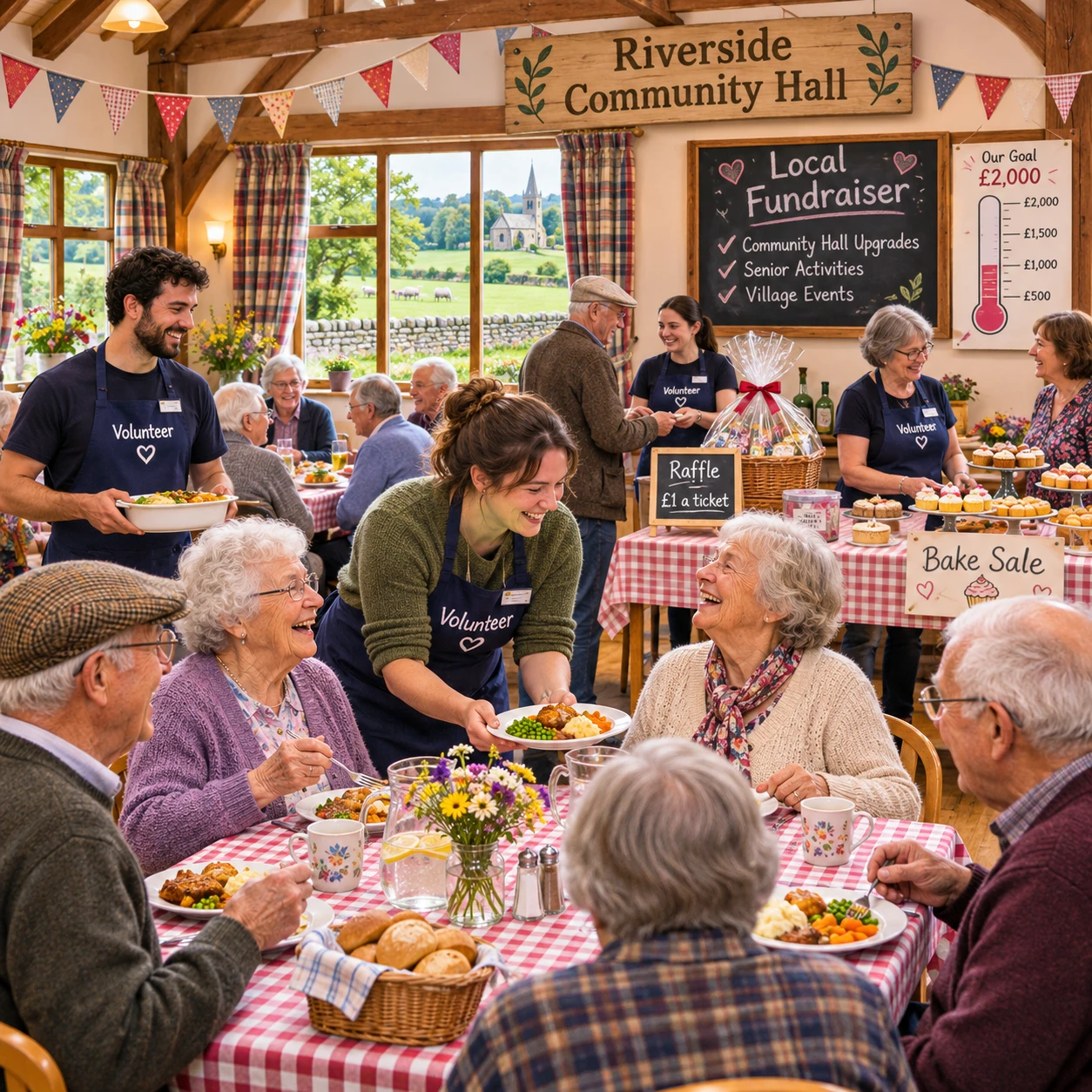
A community supper, bake sale, harvest market, craft sale, or benefit coffee morning can bring people together while raising funds. A local talent show or auction may also work if volunteers and donated items are available. Keep costs low by using a donated hall, borrowing equipment, and asking volunteers to bring supplies. Estimate expenses first, since a popular event can still earn little if food, insurance, rentals, and transport costs are high.
Distance matters. Residents may be spread across several villages, and some older adults cannot drive or stand in a busy venue. Pair an in-person event with a simple alternative, such as a donation box at a local shop, phone-based giving, or a mailed appeal. Where internet access is uneven, do not make online registration or payment the only option.
- Low-cost options: A sponsored walk on an accessible route, a community meal, a local raffle where permitted, or a small goods sale.
- Low-travel options: A collection at an existing gathering, a letter campaign, or a business-hosted donation day.
- Ongoing options: A seasonal giving drive or regular collection at a community venue.
Before announcing an event, check local rules for raffles, food service, public collections, and venue use. A smaller event with a clear purpose and reliable volunteers is usually a better fit than an ambitious plan that strains the program.
Build local partnerships and sponsorships
Local partnerships can bring in donations, supplies, services, and trusted connections. Approach businesses, civic groups, faith communities, and service clubs with a specific request that fits their capacity and supports local older adults.
Make a short list of organizations already connected to the community: grocery stores, pharmacies, farms, banks, garages, churches, libraries, volunteer associations, and clubs. Ask for something concrete, such as a fuel voucher, ingredients for a meal, printing, a donated meeting space, or a modest event sponsorship. In-kind help can reduce program costs, although it cannot replace cash for expenses such as insurance or vehicle repairs.
Explain the program’s purpose, the older adults it serves, and the particular need a partner could help address. Offer reasonable recognition, such as a thank-you in a newsletter or at an event, but avoid promising advertising or tax treatment unless you can provide it accurately. A one-page summary with contact details, a basic budget, and clear giving options makes it easier for a business to decide.
Partnerships should be reciprocal and manageable. A small shop may be able to host a collection jar but not sponsor a full event. A service club may prefer a single project with a defined cost. Thank partners promptly, report the outcome, and give them the option to continue or change their support.
Encourage individual and recurring donations
Individual donations grow when appeals explain the need, offer convenient ways to give, and show donors what happened afterward. Recurring donations can provide steadier support for predictable costs, but donors should be able to choose an amount and stop or change a gift easily.
Write a brief appeal that answers three questions: Who does the program serve? What need will donations address? How will the organization report progress? Use a real example only with permission, and avoid presenting older adults as helpless. Emphasize choice, dignity, and the practical value of reliable community support.
Offer options that suit different residents. These might include cash or cheque, a bank transfer, a secure online donation page, or a pledge card collected at a local event. For recurring gifts, explain the schedule and provide a clear contact for changes or cancellations. Follow applicable payment, privacy, and charitable solicitation rules.
Donor relationships continue after the gift. Send a prompt thank-you, then share occasional, concise updates: rides provided, meals delivered, or a service expanded. Use figures only when records support them, and explain if funds are restricted to a particular purpose. A regular gift is more likely to continue when donors trust the program’s communication and financial care.
Explore grants and in-kind support
Grants and in-kind contributions can help fund rural elderly support programs, but they require research and are never guaranteed. Check eligibility, deadlines, reporting demands, and whether the funder supports your specific service before investing time in an application.
Potential sources may include local community foundations, government programs, health or aging initiatives, rural development funds, and charitable trusts. Search official government and foundation websites, then confirm details directly with the funder. Grant priorities change, and some awards require matching funds, a formal nonprofit status, or a track record the program may not yet have.
Prepare a reusable set of basic documents: a concise description of the program, a needs statement grounded in local feedback, a realistic budget, governance information, and a plan for tracking results. Tailor each application rather than sending the same generic request everywhere. If a grant is declined, ask whether the funder can clarify fit or suggest a more suitable round.
In-kind support can be a practical alternative or complement. Ask for food, printing, accessible venue space, volunteer transport, or professional help such as bookkeeping. Record donated goods and services consistently, and remember that they may not cover essential cash expenses. Do not build a service around a donation that is uncertain or temporary unless you have a backup plan.
Make fundraising accessible and accountable
Accessible, accountable fundraising makes it easier for residents to participate and gives donors confidence that support reaches older adults. Plan around volunteer capacity, offer more than one way to give, and report income and spending in plain language.
Set a realistic limit on what volunteers can manage. Assign clear roles for event planning, cash handling, donor follow-up, and record-keeping; use two people to count and document event cash when possible. Build in breaks and avoid relying on one volunteer for every task. If a campaign requires more work than the likely return justifies, simplify it.
Consider barriers that affect both older adults and donors: limited internet access, mobility needs, hearing or vision loss, language, transport, and the timing of events. Offer large-print information, an accessible venue where available, a phone contact, and a non-digital way to donate. Ask participants what would make involvement easier rather than assuming one solution fits everyone.
After each campaign, share a short update on what was raised, what it paid for, and what remains a need. Be candid if a goal was not reached or costs changed. Trust grows through specific, consistent reporting, not inflated claims or promises of guaranteed results. Keep receipts and records according to your organization’s policies and relevant local requirements.
Frequently asked questions
What are low-cost fundraising ideas for rural communities?
Community meals, bake or craft sales, donation collections at existing gatherings, and small sponsored activities can be inexpensive when venues and supplies are donated. Compare expected income with food, travel, permits, and other costs before choosing an event.
How can a small elderly support program find local sponsors?
Start with businesses and groups that already serve or connect the community. Make a specific request, such as fuel support or meal ingredients, and provide a brief explanation of the program, its budget, and how you will acknowledge and update the sponsor.
What kinds of needs can fundraising support?
Fundraising may support transportation and meal assistance, grocery delivery, social activities, wellness calls, or supplies for volunteer-led services. Choose needs identified by local older adults and confirm the program can deliver the support safely and consistently.
How can programs encourage recurring donations?
Explain the ongoing cost a regular gift helps support, offer convenient payment choices, and make it easy to adjust or cancel. Thank donors and share brief, factual updates about the program’s work and use of funds.